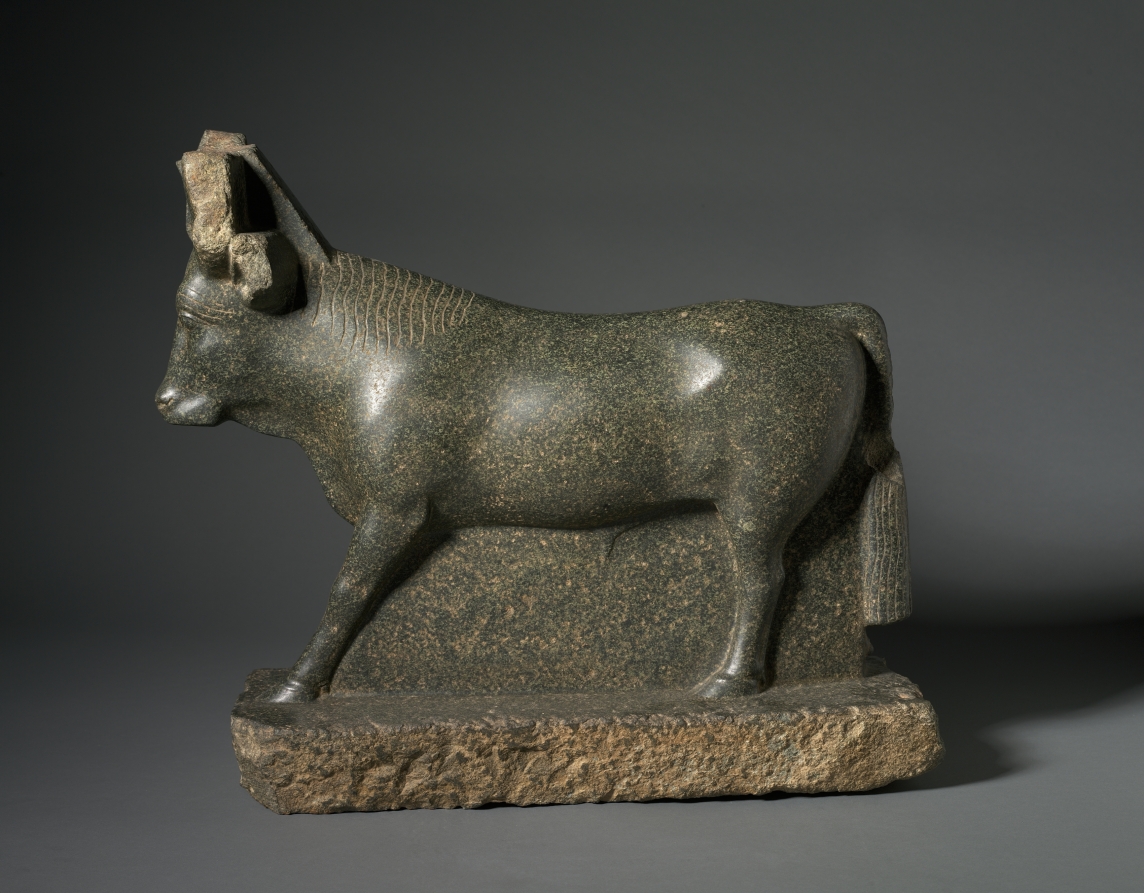
Apis Bull
| 제작 시기 | 400–100 BCE |
|---|---|
| 분류 | Sculpture |
| 재료·기법 | serpentinite |
| 문화권 | Egypt, Greco-Roman period (332 BCE–395 CE), Ptolemaic dynasty (305–30 BCE) |
| 소장 부서 | Egyptian and Ancient Near Eastern Art |
| 이용 조건 | 퍼블릭 도메인 (CC0) — 수업·인쇄에 자유롭게 사용 가능 |
작품 설명
Sacred animal cults have a long history in ancient Egypt, but they became even more important in the Ptolemaic and Roman periods. Because each god could incarnate himself into any animal species, beasts of all sorts--dogs, cats, ibises, crocodiles--were protected, venerated, mummified, and collected by the thousands in specialized animal cemeteries. The sacred bull cults were different. Apis, the bull of Memphis, was a god in his own right. But he was also associated with other deities, such as Ptah, the god of Memphis, and Osiris, in the form of Osiris-Apis (or Serapis). Statues and reliefs always show him crowned with a sun disk and cobra. When an Apis bull died, he was given a burial fit for a king in an area of the Memphite cemetery known as the Serapeum.
수업에 이렇게 활용하세요
이 작품은 퍼블릭 도메인이라 수업 자료로 자유롭게 내려받아 인쇄하거나 화면에 띄워 쓸 수 있습니다. 작품의 표현 방식을 관찰하고 따라 그려 보거나, serpentinite 기법에 대해 이야기 나누는 감상 수업에 활용할 수 있습니다.
함께 보면 좋은 작품
- Portrait of Dora Wheeler — William Merritt Chase
- Stag at Sharkey's — George Bellows
- The Biglin Brothers Turning the Stake — Thomas Eakins
- The Race Track (Death on a Pale Horse) — Albert Pinkham Ryder
- Twilight in the Wilderness — Frederic Edwin Church
- Church Street El — Charles Sheeler
이미지 출처: 클리블랜드 미술관(The Cleveland Museum of Art) 오픈액세스. 원본 소장 정보 · LUNA WHALE ART에서 더 많은 명화 검색하기