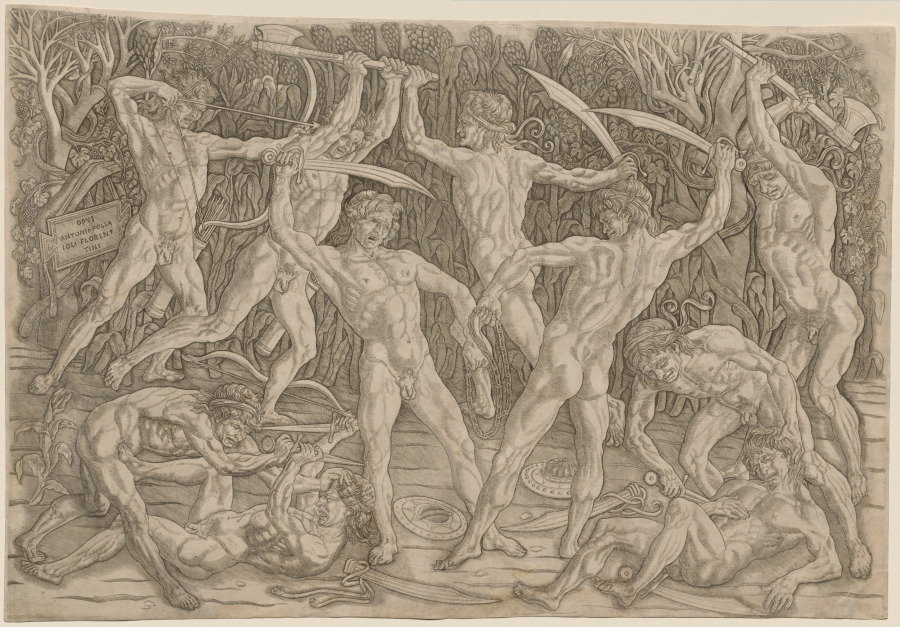
Battle of the Nudes
| 작가 | Antonio del Pollaiuolo (Italian, 1431/32–1498) |
|---|---|
| 제작 시기 | 1470s–80s |
| 분류 | |
| 재료·기법 | engraving |
| 문화권 | Italy, 15th century |
| 소장 부서 | Prints |
| 이용 조건 | 퍼블릭 도메인 (CC0) — 수업·인쇄에 자유롭게 사용 가능 |
작품 설명
This engraving is one of the earliest Renaissance prints to portray the nude male body in action. Antonio del Pollaiuolo’s grimacing warriors appear like clones in different poses. The print may have functioned as a model for workshop apprentices studying human anatomy while learning to draw; however, the artist’s Latin signature suggests it also had an audience educated in literature. Art historians remain uncertain whether Pollaiuolo intended to depict a particular story or historical event. It is possible he created a deliberately ambiguous allegory that would appeal to patrons interested in interpreting symbols. For example, the continuous chain shared by the two central men could refer to an ancient idea that the body is the chain of the soul, only to be released in death.
수업에 이렇게 활용하세요
이 작품은 퍼블릭 도메인이라 수업 자료로 자유롭게 내려받아 인쇄하거나 화면에 띄워 쓸 수 있습니다. Antonio del Pollaiuolo의 표현 방식을 관찰하고 따라 그려 보거나, engraving 기법에 대해 이야기 나누는 감상 수업에 활용할 수 있습니다.
이미지 출처: 클리블랜드 미술관(The Cleveland Museum of Art) 오픈액세스. 원본 소장 정보 · LUNA WHALE ART에서 더 많은 명화 검색하기