Bodhisattva of Wisdom (Manjushri)
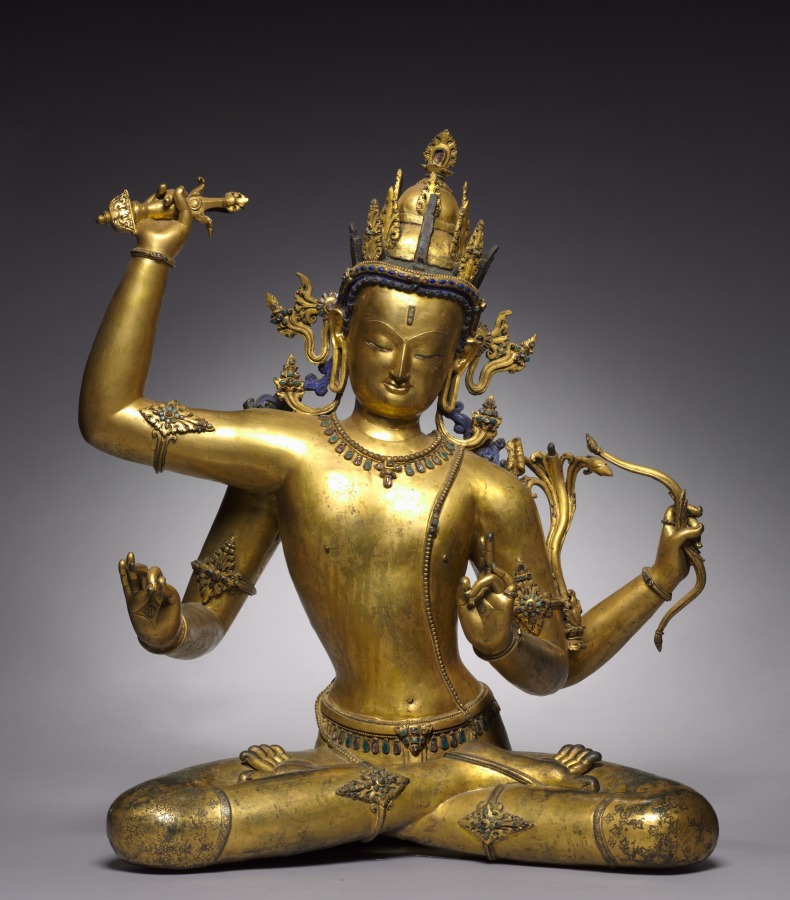
| 제작 시기 | 1400s |
|---|---|
| 분류 | Sculpture |
| 재료·기법 | Gilt bronze with precious and semiprecious stones, gum tempera, and cold gold |
| 문화권 | Nepal |
| 소장 부서 | Indian and Southeast Asian Art |
| 이용 조건 | 퍼블릭 도메인 (CC0) — 수업·인쇄에 자유롭게 사용 가능 |
작품 설명
This image depicts one of the main bodhisattvas, beings only one stage away from full enlightenment. Because the historical Buddha was a prince prior to his renunciation and life as a wandering ascetic, bodhisattvas are depicted as royal princes. This example has the sharp features, sweet expression, and crisp details characteristic of images made in Nepal during the 1400s. <br><br>In his upraised right hand Manjushri holds the hilt of a sword that, like wisdom itself, metaphorically cuts through and defeats ignorance. His lower, rear left hand grasps a bow, once probably strung with a wire. Also missing is the arrow that he likely held in his lowered right hand. Arrows were often symbols for mantras, or strings of syllables thought to have the power to focus the mind and work like missiles to destroy negativity and affliction. The gesture of his lowered left hand indicates the transmission of Buddhist teachings. The lotus stem that rises at the left elbows originally held a book of sutras. <br><br>This figure is in the yogic posture of meditation with the big toe flexed in concentration. Yoga is of central importance in tantric Buddhism, because high-level practitioners are able to discipline the body to such an extent that the mind can also be controlled.
수업에 이렇게 활용하세요
이 작품은 퍼블릭 도메인이라 수업 자료로 자유롭게 내려받아 인쇄하거나 화면에 띄워 쓸 수 있습니다. 작품의 표현 방식을 관찰하고 따라 그려 보거나, Gilt bronze with precious and semiprecious stones, gum tempera, and cold gold 기법에 대해 이야기 나누는 감상 수업에 활용할 수 있습니다.
함께 보면 좋은 작품
- Portrait of Dora Wheeler — William Merritt Chase
- Stag at Sharkey's — George Bellows
- The Biglin Brothers Turning the Stake — Thomas Eakins
- The Race Track (Death on a Pale Horse) — Albert Pinkham Ryder
- Twilight in the Wilderness — Frederic Edwin Church
- Church Street El — Charles Sheeler
이미지 출처: 클리블랜드 미술관(The Cleveland Museum of Art) 오픈액세스. 원본 소장 정보 · LUNA WHALE ART에서 더 많은 명화 검색하기