Buddhist Priest's Ceremonial Robe
| 제작 시기 | 1400s |
|---|---|
| 분류 | Garment |
| 재료·기법 | silk and gold thread; embroidery |
| 문화권 | China, Ming dynasty (1368–1644) |
| 소장 부서 | Textiles |
| 이용 조건 | 퍼블릭 도메인 (CC0) — 수업·인쇄에 자유롭게 사용 가능 |
작품 설명
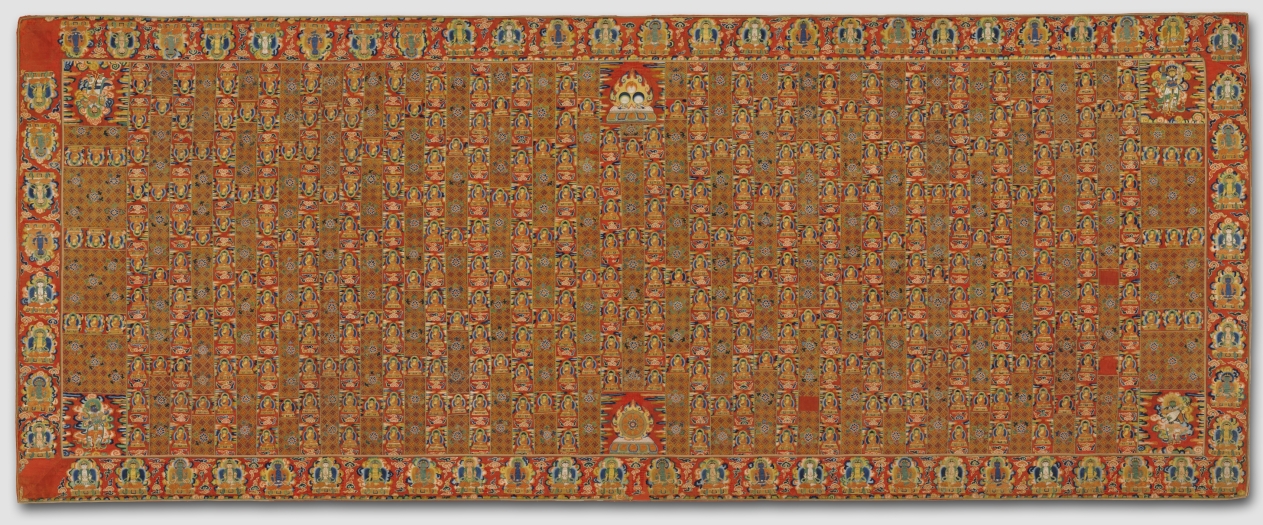
This example of imperial embroidery is one of the earliest surviving Chinese Buddhist robes (<em>kasaya</em>) in the West. Depicting 991 Buddhas, each slightly different, it is constructed out of patches in reference to the legend in which the Buddha's favorite disciple divided a robe he was given into 30 pieces. Patchwork is also a sign of humility. Multiple Buddha images known as “thousand Buddha” designs are seen painted and sculpted on the walls of cave temples in India, Afghanistan, Central Asia, and China, but are rare on garments. The Four Heavenly Kings, guardians of the four directions, occupy the textile’s corners. When draped around the body, the inverted figures in the upper left corner appear right side up. Robes with 25 columns were worn by the highest-ranking clergy on ceremonial occasions.
수업에 이렇게 활용하세요
이 작품은 퍼블릭 도메인이라 수업 자료로 자유롭게 내려받아 인쇄하거나 화면에 띄워 쓸 수 있습니다. 작품의 표현 방식을 관찰하고 따라 그려 보거나, silk and gold thread; embroidery 기법에 대해 이야기 나누는 감상 수업에 활용할 수 있습니다.
함께 보면 좋은 작품
- Portrait of Dora Wheeler — William Merritt Chase
- Stag at Sharkey's — George Bellows
- The Biglin Brothers Turning the Stake — Thomas Eakins
- The Race Track (Death on a Pale Horse) — Albert Pinkham Ryder
- Twilight in the Wilderness — Frederic Edwin Church
- Church Street El — Charles Sheeler
이미지 출처: 클리블랜드 미술관(The Cleveland Museum of Art) 오픈액세스. 원본 소장 정보 · LUNA WHALE ART에서 더 많은 명화 검색하기