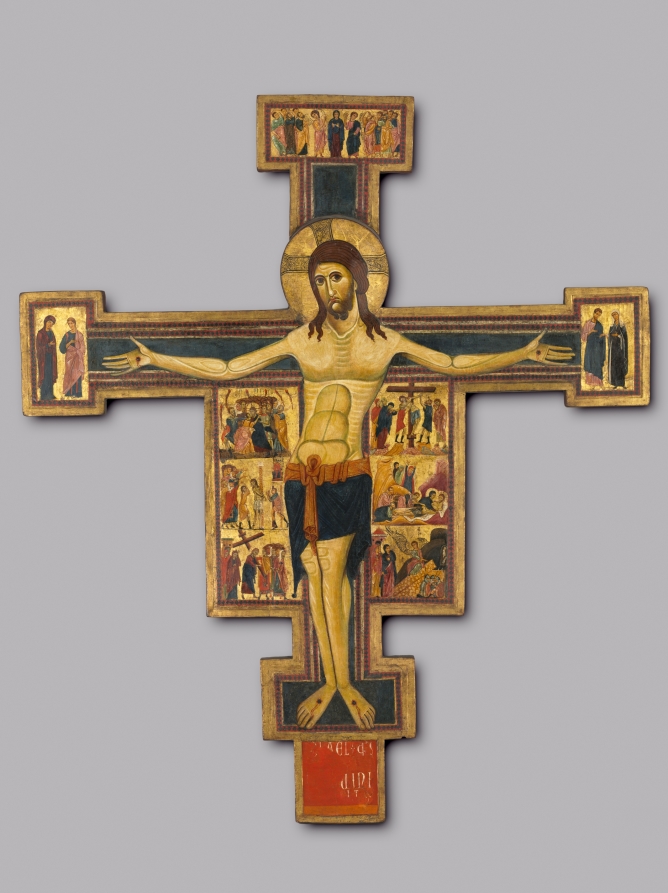
Crucifix with Scenes of the Passion
| 제작 시기 | c. 1230–40 |
|---|---|
| 분류 | Painting |
| 재료·기법 | tempera with gold on panel |
| 문화권 | Italy, Pisa |
| 소장 부서 | Medieval Art |
| 이용 조건 | 퍼블릭 도메인 (CC0) — 수업·인쇄에 자유롭게 사용 가능 |
작품 설명
Large painted crucifixes dating from the 1100s and 1200s are among the earliest surviving Italian panel paintings. Large crosses, like this beautiful example, were typically suspended high above an altar in the main apse of Italian churches. Smaller crosses were placed on or just above altars in small side chapels. Such crosses served as the visual focus for devotion and symbolized the Eucharistic sacrament performed by the priest on the altar below. This crucifix shows Christ alive on the cross as the triumphant savior of mankind. Smaller images on the "apron" represent images of Christ's Passion (to the left) and his death and Resurrection (to the right). On the far left terminal appear the mourning Virgin and Saint John the Evangelist, while on the right the viewer is shown Saint James Major and Saint Bona, patroness of the city of Pisa. The concluding event, the Ascension of Christ, once appeared on the upper terminal, just above the Virgin and Apostles. The figure of Christ is painted in a severe and hieratic style suggestive of medieval Pisa's artistic and commercial links with the Byzantine East. The appearance of Saint Bona on this cross may suggest that it was made for the Church of S. Martino in Pisa, where Franciscan nuns tended the holy woman's relics.
수업에 이렇게 활용하세요
이 작품은 퍼블릭 도메인이라 수업 자료로 자유롭게 내려받아 인쇄하거나 화면에 띄워 쓸 수 있습니다. 작품의 표현 방식을 관찰하고 따라 그려 보거나, tempera with gold on panel 기법에 대해 이야기 나누는 감상 수업에 활용할 수 있습니다.
함께 보면 좋은 작품
- Portrait of Dora Wheeler — William Merritt Chase
- Stag at Sharkey's — George Bellows
- The Biglin Brothers Turning the Stake — Thomas Eakins
- The Race Track (Death on a Pale Horse) — Albert Pinkham Ryder
- Twilight in the Wilderness — Frederic Edwin Church
- Church Street El — Charles Sheeler
이미지 출처: 클리블랜드 미술관(The Cleveland Museum of Art) 오픈액세스. 원본 소장 정보 · LUNA WHALE ART에서 더 많은 명화 검색하기