Ganesha
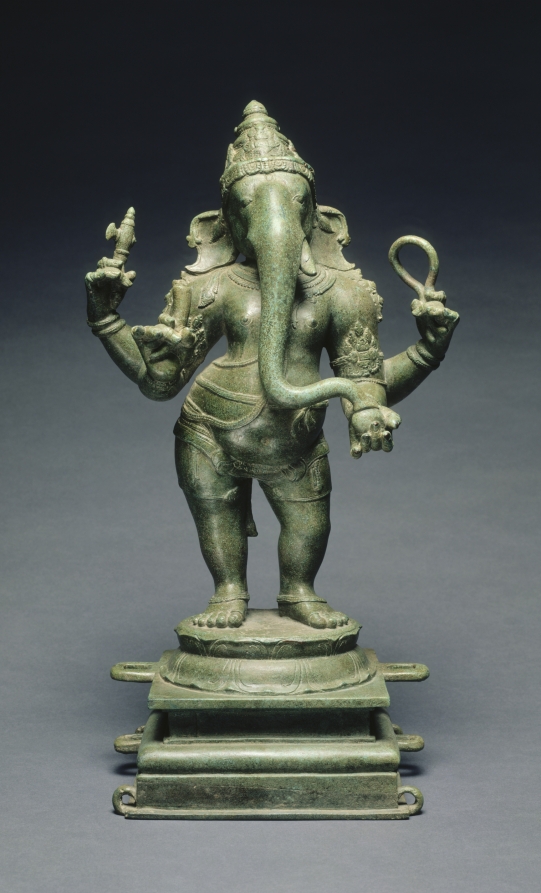
| 제작 시기 | c. 1070 |
|---|---|
| 분류 | Sculpture |
| 재료·기법 | bronze |
| 문화권 | South India, Medieval period, Chola dynasty(10th-13th century) |
| 소장 부서 | Indian and Southeast Asian Art |
| 이용 조건 | 퍼블릭 도메인 (CC0) — 수업·인쇄에 자유롭게 사용 가능 |
작품 설명
Ganesha, the god of wealth and abundance, is an auspicious and revered Hindu deity. He removes obstacles and protects his worshipers. Numerous myths explain how Ganesha became an elephant-man composite, but the most popular version relates the story of how he was decapitated by his enraged father, Shiva, and restored to life through the intervention of his mother, Parvati. Shiva agreed to revive him with the head of the first creature encountered: an elephant. Ganesha's strength—his profound spiritual wisdom—contrasts with his weakness for sweets, as indicated by his pudginess and the sweet <em>modaka</em> he carries. In Ganesha, opposing forces exist in perfect harmony.
수업에 이렇게 활용하세요
이 작품은 퍼블릭 도메인이라 수업 자료로 자유롭게 내려받아 인쇄하거나 화면에 띄워 쓸 수 있습니다. 작품의 표현 방식을 관찰하고 따라 그려 보거나, bronze 기법에 대해 이야기 나누는 감상 수업에 활용할 수 있습니다.
함께 보면 좋은 작품
- Portrait of Dora Wheeler — William Merritt Chase
- Stag at Sharkey's — George Bellows
- The Biglin Brothers Turning the Stake — Thomas Eakins
- The Race Track (Death on a Pale Horse) — Albert Pinkham Ryder
- Twilight in the Wilderness — Frederic Edwin Church
- Church Street El — Charles Sheeler
이미지 출처: 클리블랜드 미술관(The Cleveland Museum of Art) 오픈액세스. 원본 소장 정보 · LUNA WHALE ART에서 더 많은 명화 검색하기