Hell Courtesan
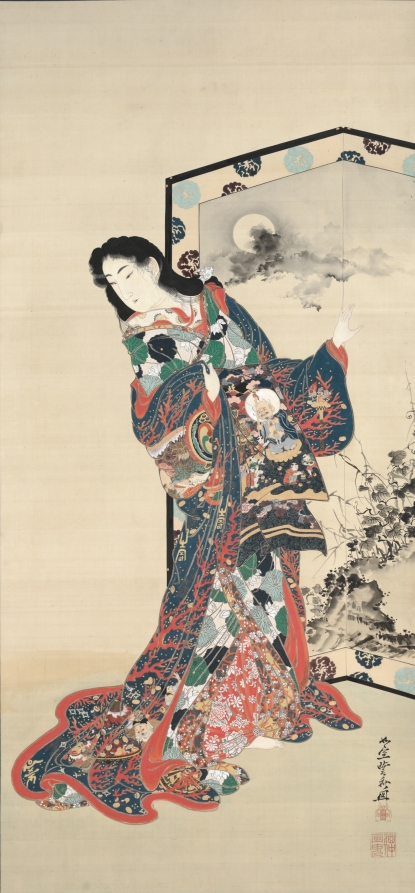
| 작가 | Kawanabe Kyōsai (Japanese, 1831–1889) |
|---|---|
| 제작 시기 | 1871–89 |
| 분류 | Painting |
| 재료·기법 | Hanging scroll; ink, color, gold, and silver on silk |
| 문화권 | Japan, Meiji period (1868–1912) |
| 소장 부서 | Japanese Art |
| 이용 조건 | 퍼블릭 도메인 (CC0) — 수업·인쇄에 자유롭게 사용 가능 |
작품 설명
Kawanabe Kyōsai repeated this large-scale composition with variations a number of times. In this version, a famous 15th-century courtesan known for wearing a robe with images of the Buddhist hells stands before a folding screen. Legend has it that she was abducted by bandits, and wore the garment to symbolize her belief that her suffering in her current life was punishment for sins committed in a former life. Here, in a parody depiction of the garment, the courtesan stands in for Benzaiten, the goddess of everything that flows, while the remaining members of the Seven Gods of Good Fortune appear on her outer robe. One of them reports sins to Enma, the King of Hell, who is writing out his judgments on the recently deceased.
수업에 이렇게 활용하세요
이 작품은 퍼블릭 도메인이라 수업 자료로 자유롭게 내려받아 인쇄하거나 화면에 띄워 쓸 수 있습니다. Kawanabe Kyōsai의 표현 방식을 관찰하고 따라 그려 보거나, Hanging scroll; ink, color, gold, and silver on silk 기법에 대해 이야기 나누는 감상 수업에 활용할 수 있습니다.
함께 보면 좋은 작품
- Calligraphy and Painting Party — Kawanabe Kyōsai
이미지 출처: 클리블랜드 미술관(The Cleveland Museum of Art) 오픈액세스. 원본 소장 정보 · LUNA WHALE ART에서 더 많은 명화 검색하기