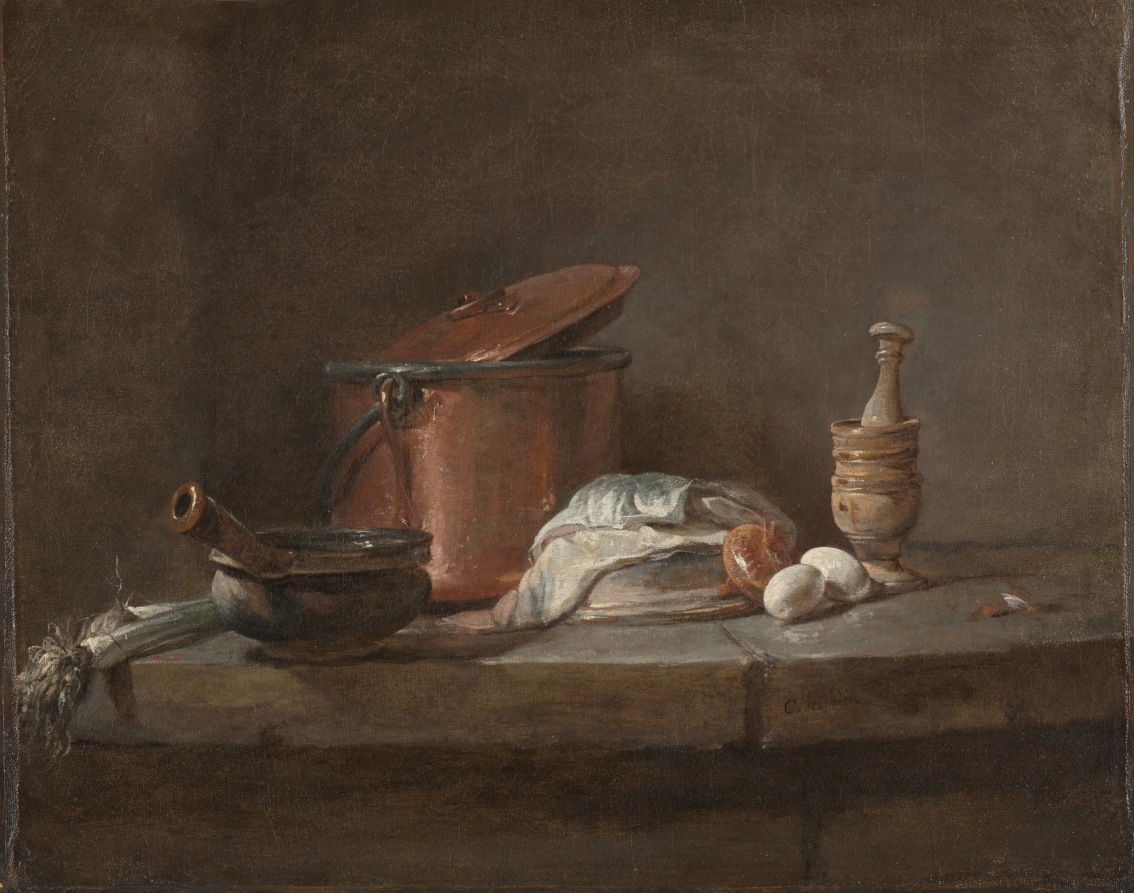
Kitchen Utensils with Leeks, Fish, and Eggs
| 작가 | Jean-Siméon Chardin (French, 1699–1779) |
|---|---|
| 제작 시기 | c. 1734 |
| 분류 | Painting |
| 재료·기법 | oil on canvas |
| 문화권 | France, 18th century |
| 소장 부서 | European Painting and Sculpture |
| 이용 조건 | 퍼블릭 도메인 (CC0) — 수업·인쇄에 자유롭게 사용 가능 |
작품 설명
Chardin was already famous by 1730, when he began to paint small, sparse still lifes of kitchen utensils. He often used the same elements in his compositions, varying slightly the position of the objects and adding or subtracting a utensil—always carefully placing each in relation to the rest to achieve a balanced design. Chardin was the contemporary of François Boucher (1703–1770) and he taught Jean-Honoré Fragonard (1732–1806), but his work is a contrast to theirs, representing the naturalistic tendency that persisted alongside the more fashionable lightness, grace, and playfulness of the Rococo. Chardin discovered a hidden poetry in even the most humble objects, bringing the viewer into an earthly world experienced with directness and simplicity.
수업에 이렇게 활용하세요
이 작품은 퍼블릭 도메인이라 수업 자료로 자유롭게 내려받아 인쇄하거나 화면에 띄워 쓸 수 있습니다. Jean-Siméon Chardin의 표현 방식을 관찰하고 따라 그려 보거나, oil on canvas 기법에 대해 이야기 나누는 감상 수업에 활용할 수 있습니다.
함께 보면 좋은 작품
- Still Life with Herrings — Jean-Siméon Chardin
이미지 출처: 클리블랜드 미술관(The Cleveland Museum of Art) 오픈액세스. 원본 소장 정보 · LUNA WHALE ART에서 더 많은 명화 검색하기