Male Figure (nkishi)
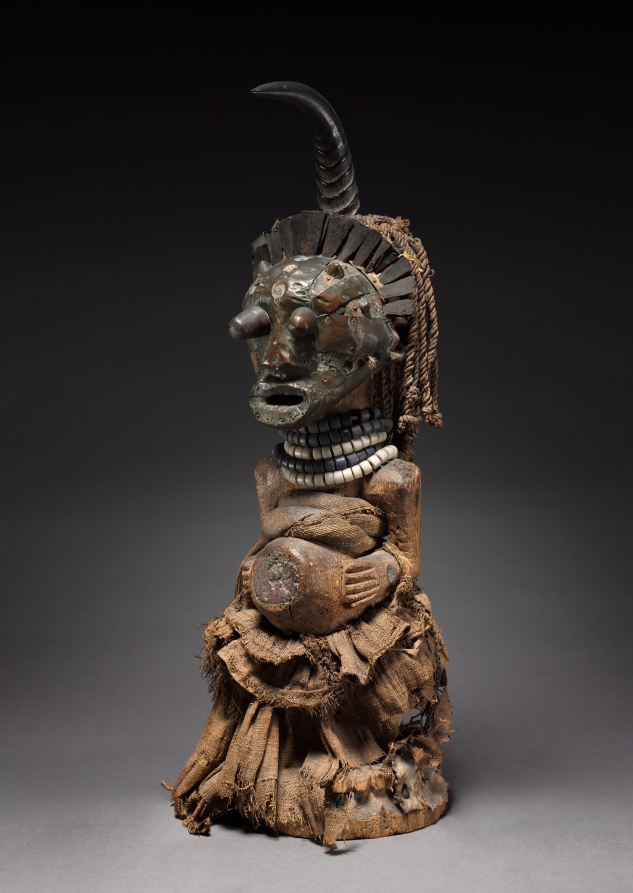
| 제작 시기 | late 1800s–early 1900s |
|---|---|
| 분류 | Sculpture |
| 재료·기법 | Wood, glass beads, brass (including upholstery studs), copper alloy, iron alloy, raffia, reedbuck antelope horn, rawhide, animal hair, human teeth, organic material, minerals, and plant fibers |
| 문화권 | Africa, Central Africa, Democratic Republic of Congo, Songye-style carver and nganga (priest) |
| 소장 부서 | African Art |
| 이용 조건 | 퍼블릭 도메인 (CC0) — 수업·인쇄에 자유롭게 사용 가능 |
작품 설명
This figure's visual impact and workmanship suggest that an extended family––rather than an individual––used it. The raffia skirt around the waist and the blue and white beads are indicators of leadership. The metal appliqué covering the face and the metal blades that hedge the headgear refer to the blacksmith, a culture hero celebrated in a Songye myth narrating the formation of the state. The metal strips on the skeletal face are said to relate to lightning, signaling the figure's role as a powerful anti-sorcerer, but the contrast between white iron and red copper symbolically alludes to the ambivalent powers of the figure.
수업에 이렇게 활용하세요
이 작품은 퍼블릭 도메인이라 수업 자료로 자유롭게 내려받아 인쇄하거나 화면에 띄워 쓸 수 있습니다. 작품의 표현 방식을 관찰하고 따라 그려 보거나, Wood, glass beads, brass (including upholstery studs), copper alloy, iron alloy, raffia, reedbuck antelope horn, rawhide, animal hair, human teeth, organic material, minerals, and plant fibers 기법에 대해 이야기 나누는 감상 수업에 활용할 수 있습니다.
함께 보면 좋은 작품
- Portrait of Dora Wheeler — William Merritt Chase
- Stag at Sharkey's — George Bellows
- The Biglin Brothers Turning the Stake — Thomas Eakins
- The Race Track (Death on a Pale Horse) — Albert Pinkham Ryder
- Twilight in the Wilderness — Frederic Edwin Church
- Church Street El — Charles Sheeler
이미지 출처: 클리블랜드 미술관(The Cleveland Museum of Art) 오픈액세스. 원본 소장 정보 · LUNA WHALE ART에서 더 많은 명화 검색하기