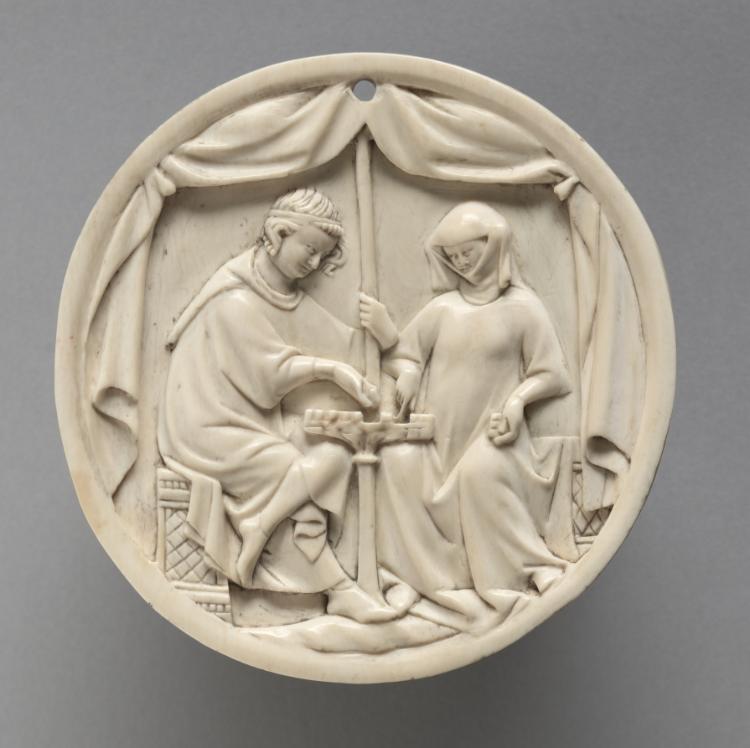
Mirror Case with a Couple Playing Chess
| 제작 시기 | 1325–50 |
|---|---|
| 분류 | Ivory |
| 재료·기법 | ivory |
| 문화권 | France, Paris |
| 소장 부서 | Medieval Art |
| 이용 조건 | 퍼블릭 도메인 (CC0) — 수업·인쇄에 자유롭게 사용 가능 |
작품 설명
During the 1300s, elephant ivory was valued by courtly patrons as the most exquisite material for indicating the human form. At this time Paris was the center of production for luxury ivories like the example seen here. They were <br>much sought after by members of the court and aristocracy as emblems of wealth and status and signifiers of fashion and taste. This ivory, once forming a mirror back, depicts a man and woman engaged in a game of chess, a popular game at the time representing both love and war in medieval iconography. Various suggestions have been proposed for the identity of the couple—Tristan and Iseult or Lancelot and Guinevere—without certainty. Mirror backs survive in large numbers from the 1300s and typically depict amorous encounters or chivalrous behavior. They were produced for a secular clientele steeped in romantic literature and with an appetite for luxury objects.
수업에 이렇게 활용하세요
이 작품은 퍼블릭 도메인이라 수업 자료로 자유롭게 내려받아 인쇄하거나 화면에 띄워 쓸 수 있습니다. 작품의 표현 방식을 관찰하고 따라 그려 보거나, ivory 기법에 대해 이야기 나누는 감상 수업에 활용할 수 있습니다.
함께 보면 좋은 작품
- Portrait of Dora Wheeler — William Merritt Chase
- Stag at Sharkey's — George Bellows
- The Biglin Brothers Turning the Stake — Thomas Eakins
- The Race Track (Death on a Pale Horse) — Albert Pinkham Ryder
- Twilight in the Wilderness — Frederic Edwin Church
- Church Street El — Charles Sheeler
이미지 출처: 클리블랜드 미술관(The Cleveland Museum of Art) 오픈액세스. 원본 소장 정보 · LUNA WHALE ART에서 더 많은 명화 검색하기