One-Faced Linga (Ekamukhalinga)
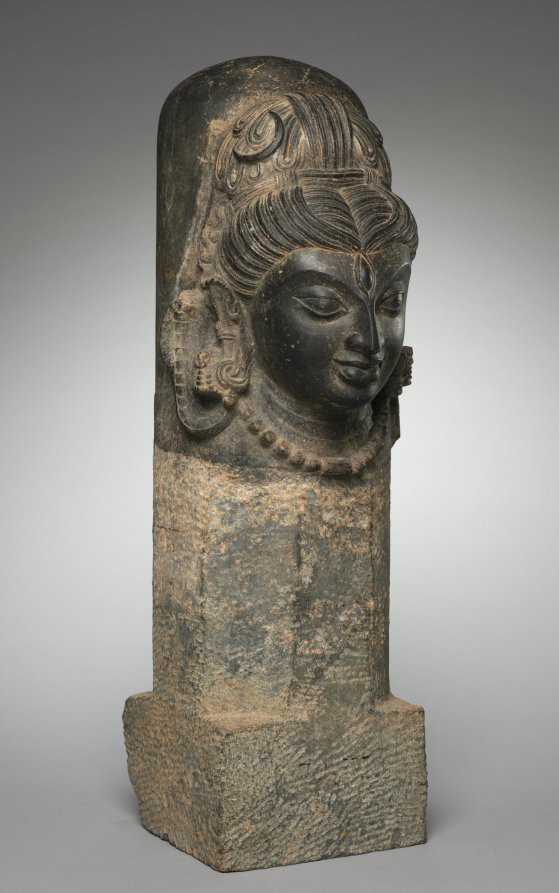
| 제작 시기 | 600s–700s |
|---|---|
| 분류 | Sculpture |
| 재료·기법 | chloritic schist |
| 문화권 | Eastern India, Bihar, Medieval period, Pala dynasty |
| 소장 부서 | Indian and Southeast Asian Art |
| 이용 조건 | 퍼블릭 도메인 (CC0) — 수업·인쇄에 자유롭게 사용 가능 |
작품 설명
The innermost sanctum of a Hindu temple dedicated to Shiva is called a womb chamber in which a stylized phallus called a linga is installed. Together, the chamber and linga represent the potentiality of creation. Artists depict the first stage of creation by a face emerging from the phallus, which embodies one aspect of Shiva. This face is of a powerful yogi, with long matted locks adorned with a crescent moon. He has a penetrating gaze with all three of his eyes. This icon would have been accessed primarily by Brahmin priests who would perform rituals honoring Shiva as the ultimate creator of the world.
수업에 이렇게 활용하세요
이 작품은 퍼블릭 도메인이라 수업 자료로 자유롭게 내려받아 인쇄하거나 화면에 띄워 쓸 수 있습니다. 작품의 표현 방식을 관찰하고 따라 그려 보거나, chloritic schist 기법에 대해 이야기 나누는 감상 수업에 활용할 수 있습니다.
함께 보면 좋은 작품
- Portrait of Dora Wheeler — William Merritt Chase
- Stag at Sharkey's — George Bellows
- The Biglin Brothers Turning the Stake — Thomas Eakins
- The Race Track (Death on a Pale Horse) — Albert Pinkham Ryder
- Twilight in the Wilderness — Frederic Edwin Church
- Church Street El — Charles Sheeler
이미지 출처: 클리블랜드 미술관(The Cleveland Museum of Art) 오픈액세스. 원본 소장 정보 · LUNA WHALE ART에서 더 많은 명화 검색하기