Prayer Niche (Mihrab)
| 제작 시기 | c. 1500s or mid-1900s |
|---|---|
| 분류 | Ceramic |
| 재료·기법 | ceramic mosaic |
| 문화권 | Iran, Isfahan, in the style of the Safavid period (1501–1722) |
| 소장 부서 | Islamic Art |
| 이용 조건 | 퍼블릭 도메인 (CC0) — 수업·인쇄에 자유롭게 사용 가능 |
작품 설명
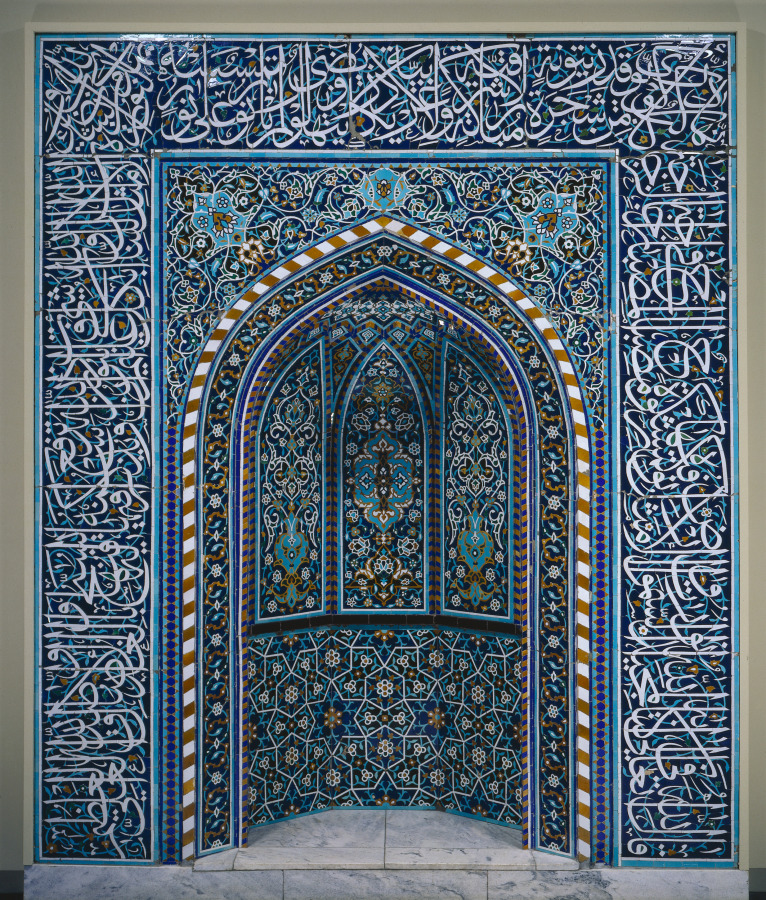
The prayer niche (or <em>mihrab</em> in Arabic) is the focal point in the interior of a mosque, located in the <em>qibla</em> wall that faces Mecca, the holy city of Islam. Verses from the holy Qur’an, written in a form of Arabic script called <em>thuluth</em>, surround the mihrab. The inscription is rendered with white glaze, while the continuous arabesque vine behind the Qur’anic text is executed in gold, turquoise, and green—the color of the Prophet Muhammad and of paradise.<br> <br>The inscription is from the Chapter of Light (<em>Surah An-Nur</em>): “Allah is the light of the Heavens and the Earth. His Light is like a niche in which is a lamp—the lamp enclosed in glass—the glass, as it were, a glistening star; lit from a blessed olive tree, neither of the East nor of the West, whose oil would almost glow, even though fire touched it not. Light upon light! Allah guides whom He will to His light, and Allah sets forth parables for men, and Allah knows all things.” <br><br>The artistic and calligraphic styles suggest this mihrab was made about 1500, but the physical appearance of the ceramic mosaic pieces does not. The glaze colors are too consistent, and they have not discolored from moisture seeping behind the cut tile edges. Clay substrates of the tiles were tested in 2001 using thermoluminescence to determine the date the tiles were fired. The results indicated that the tiles were modern, made between 1941 and 1961, and they are under further examination.
수업에 이렇게 활용하세요
이 작품은 퍼블릭 도메인이라 수업 자료로 자유롭게 내려받아 인쇄하거나 화면에 띄워 쓸 수 있습니다. 작품의 표현 방식을 관찰하고 따라 그려 보거나, ceramic mosaic 기법에 대해 이야기 나누는 감상 수업에 활용할 수 있습니다.
함께 보면 좋은 작품
- Portrait of Dora Wheeler — William Merritt Chase
- Stag at Sharkey's — George Bellows
- The Biglin Brothers Turning the Stake — Thomas Eakins
- The Race Track (Death on a Pale Horse) — Albert Pinkham Ryder
- Twilight in the Wilderness — Frederic Edwin Church
- Church Street El — Charles Sheeler
이미지 출처: 클리블랜드 미술관(The Cleveland Museum of Art) 오픈액세스. 원본 소장 정보 · LUNA WHALE ART에서 더 많은 명화 검색하기