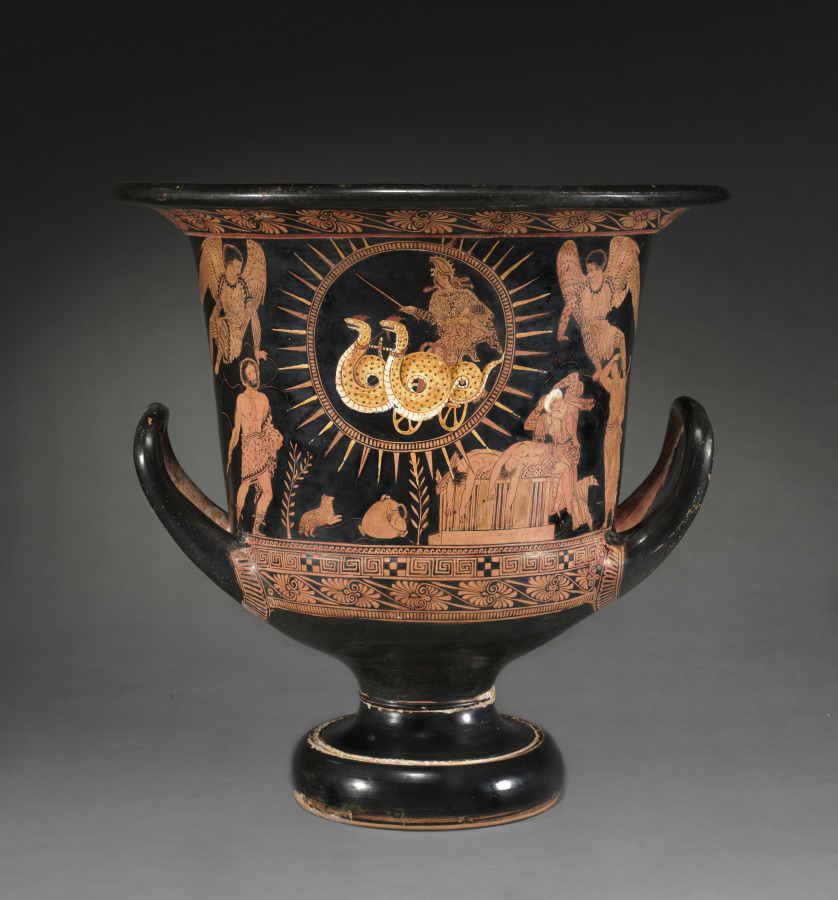
Red-Figure Calyx-Krater (Mixing Vessel): Medea in Chariot (A); Telephos with Baby Orestes (B)
| 작가 | Policoro Painter (South Italian, Lucanian, active c. 400 BCE) |
|---|---|
| 제작 시기 | c. 400 BCE |
| 분류 | Ceramic |
| 재료·기법 | ceramic |
| 문화권 | South Italian, Lucanian |
| 소장 부서 | Greek and Roman Art |
| 이용 조건 | 퍼블릭 도메인 (CC0) — 수업·인쇄에 자유롭게 사용 가능 |
작품 설명
The remarkable scene on the front of this vase relates to the famous tragedy <em>Medea</em>, written by Euripides and first produced in Athens in 431 BC. Framed in the center by a halo (recalling her sun god grandfather Helios), the sorceress Medea flies off in a dragon-drawn chariot. Seeking revenge against her husband Jason, leader of the Argonauts, Medea has just slain their two children. Two Furies flank her, while Jason and a distraught nurse and teacher approach the bodies on the altar below. <br><br>A different tragedy unfolds on the other side of the vase, from Euripides’s <em>Telephos</em> (438 BC). The wounded warrior Telephos holds the baby Orestes hostage at an altar, with Agamemnon and Clytemnestra rushing to save their son.
수업에 이렇게 활용하세요
이 작품은 퍼블릭 도메인이라 수업 자료로 자유롭게 내려받아 인쇄하거나 화면에 띄워 쓸 수 있습니다. Policoro Painter의 표현 방식을 관찰하고 따라 그려 보거나, ceramic 기법에 대해 이야기 나누는 감상 수업에 활용할 수 있습니다.
이미지 출처: 클리블랜드 미술관(The Cleveland Museum of Art) 오픈액세스. 원본 소장 정보 · LUNA WHALE ART에서 더 많은 명화 검색하기