Saint Peter of Alcántara
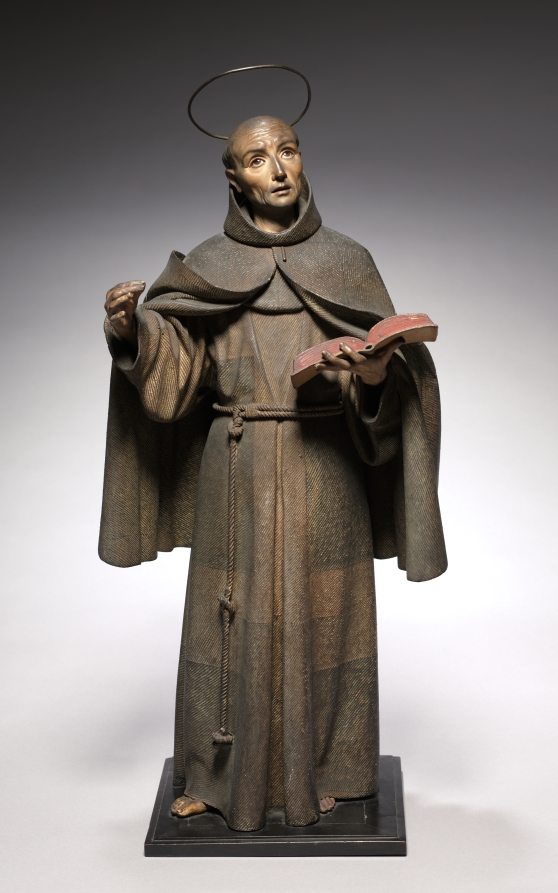
| 작가 | Pedro de Mena (Spanish, 1628–1688) |
|---|---|
| 제작 시기 | c. 1663–70 |
| 분류 | Sculpture |
| 재료·기법 | painted wood, with ivory and glass |
| 문화권 | Spain |
| 소장 부서 | European Painting and Sculpture |
| 이용 조건 | 퍼블릭 도메인 (CC0) — 수업·인쇄에 자유롭게 사용 가능 |
작품 설명
Painted wood sculpture from Spain in the 1600s involved a team of artisans working under a lead sculptor. The sculptor first carved numerous pieces of wood in complex forms. So the paint would stick properly, these fragments were delicately covered in gesso (a combination of white chalk and glue made from animal collagen), preserving the subtle woodcarving underneath. The rough surface of the saint's face—reflecting his age and hardships—came from texturing the gesso with a brush. The glass eyes, probably imported from Venice, were inserted from behind the face before the wood pieces were attached. Finally, the eyelashes were added for a further touch of realism. A painter created the appearance of coarse sackcloth in a distinctive style, with yellow strokes rising off the surface. Smoother brushstrokes form the flesh tones, even revealing the saint's five-o'clock shadow. Unlike other kinds of painting, sculpture from southern Spain at this time was usually not covered in varnish; sculptors prized the unvarnished paint for its realistic effect, although it makes the surface exceptionally delicate and susceptible to dust and dirt, which more easily sticks to the surface.
수업에 이렇게 활용하세요
이 작품은 퍼블릭 도메인이라 수업 자료로 자유롭게 내려받아 인쇄하거나 화면에 띄워 쓸 수 있습니다. Pedro de Mena의 표현 방식을 관찰하고 따라 그려 보거나, painted wood, with ivory and glass 기법에 대해 이야기 나누는 감상 수업에 활용할 수 있습니다.
이미지 출처: 클리블랜드 미술관(The Cleveland Museum of Art) 오픈액세스. 원본 소장 정보 · LUNA WHALE ART에서 더 많은 명화 검색하기