Scenes from the Life of Buddha
| 제작 시기 | 100s CE |
|---|---|
| 분류 | Sculpture |
| 재료·기법 | schist |
| 문화권 | Pakistan, Gandhara, Kushan period |
| 소장 부서 | Indian and Southeast Asian Art |
| 이용 조건 | 퍼블릭 도메인 (CC0) — 수업·인쇄에 자유롭게 사용 가능 |
작품 설명
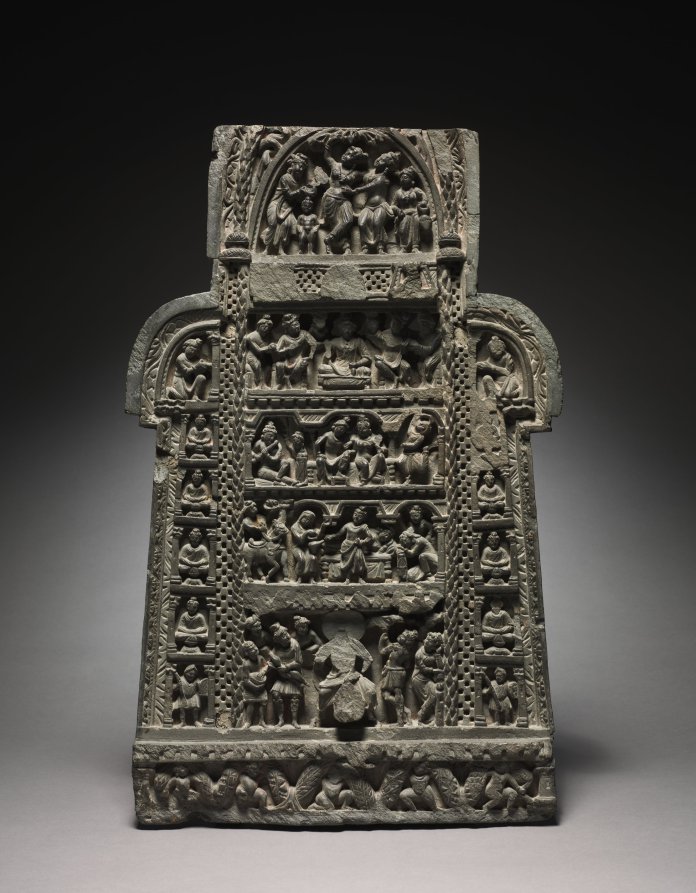
In this compact narrative relief, which was made to adorn a Buddhist stupa, scenes from the early life of the Buddha are depicted in order from top to bottom. His birth is at the top. The infant, now broken, is being received by Indra, King of the Gods, from the right side of his mother, who is depicted like a tree deity, grasping a branch with one hand. The baby Buddha miraculously took seven steps immediately after he was born, as indicated by the standing diminutive figure at the left of the scene. The next scene depicts the bodhisattva Maitreya, who will be the next Buddha to be born in the future, as an element of foreshadowing. Returning to the life of the historical Buddha, the sculptors then depict him as a prince, enjoying palace life with his wife. Eventually, he is compelled to leave his family to seek enlightenment and try to end the suffering in the world. In the lowest panel he rides off to the forest with a carved halo behind his head. In the border areas are meditating Buddha images, worshippers, guardians, and earth deities who drag a massive flower garland adorning the panel.
수업에 이렇게 활용하세요
이 작품은 퍼블릭 도메인이라 수업 자료로 자유롭게 내려받아 인쇄하거나 화면에 띄워 쓸 수 있습니다. 작품의 표현 방식을 관찰하고 따라 그려 보거나, schist 기법에 대해 이야기 나누는 감상 수업에 활용할 수 있습니다.
함께 보면 좋은 작품
- Portrait of Dora Wheeler — William Merritt Chase
- Stag at Sharkey's — George Bellows
- The Biglin Brothers Turning the Stake — Thomas Eakins
- The Race Track (Death on a Pale Horse) — Albert Pinkham Ryder
- Twilight in the Wilderness — Frederic Edwin Church
- Church Street El — Charles Sheeler
이미지 출처: 클리블랜드 미술관(The Cleveland Museum of Art) 오픈액세스. 원본 소장 정보 · LUNA WHALE ART에서 더 많은 명화 검색하기