Scenes of Witchcraft
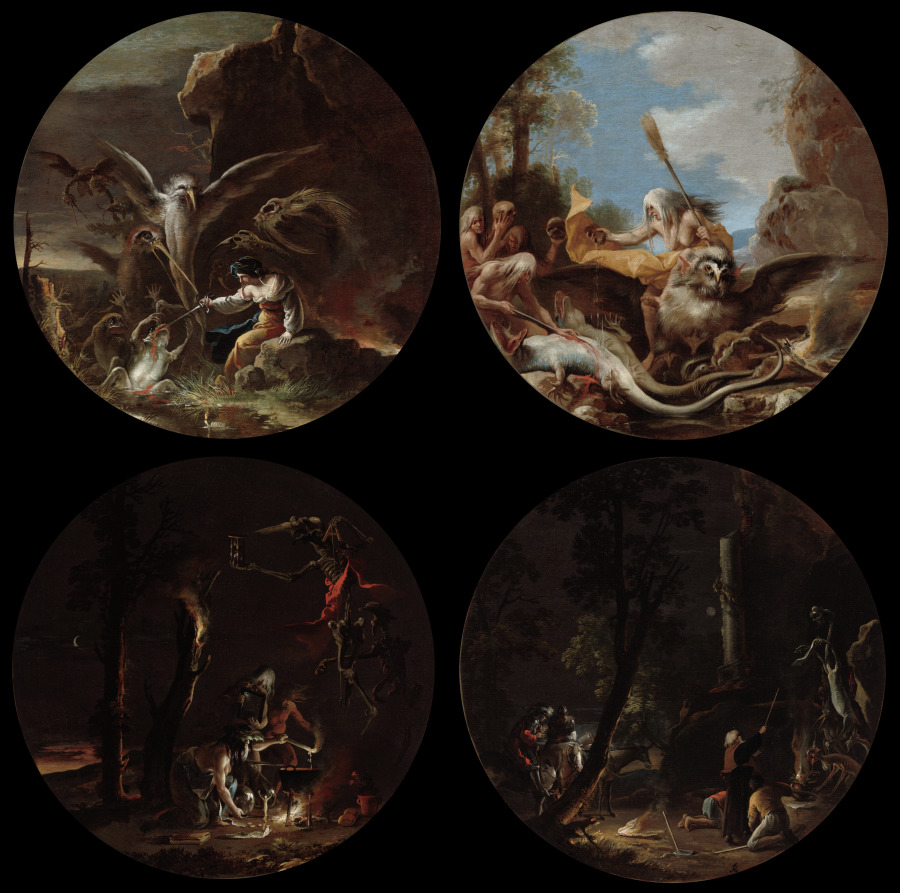
| 작가 | Salvator Rosa (Italian, 1615–1673) |
|---|---|
| 제작 시기 | c. 1645–1649 |
| 분류 | Painting |
| 재료·기법 | oil on canvas |
| 문화권 | Italy, 17th century |
| 소장 부서 | European Painting and Sculpture |
| 이용 조건 | 퍼블릭 도메인 (CC0) — 수업·인쇄에 자유롭게 사용 가능 |
작품 설명
A huge upturn in interest in witchcraft emerged during the 1500s in Europe, but by the middle of the next century—at least among the cultured elite of Florence—a backlash arose against the many accusations of sorcery. Artists and writers explored the topic more out of curiosity and amusement, chief among them the poet, painter, and satirist Salvator Rosa, who examined witchcraft with gusto in numerous poems and works of art, including these four paintings. They show a range witch types, from the beautiful enchantress to the old crone to the male sorcerer, and represent activities commonly associated with black magic: levitation, love potions, devil worship, the invocation of demons, and transformation. A common subject in Italian art of the 1600s, transformation was usually seen in interpretations of myths based on Ovid's ancient Latin text, the <em>Metamophoses</em>. Rosa found a novel way to exploit this idea, drawing attention to his own ability to transform paint and canvas into a disturbing, nightmarish world.
수업에 이렇게 활용하세요
이 작품은 퍼블릭 도메인이라 수업 자료로 자유롭게 내려받아 인쇄하거나 화면에 띄워 쓸 수 있습니다. Salvator Rosa의 표현 방식을 관찰하고 따라 그려 보거나, oil on canvas 기법에 대해 이야기 나누는 감상 수업에 활용할 수 있습니다.
함께 보면 좋은 작품
- Scenes of Witchcraft: Morning — Salvator Rosa
- Scenes of Witchcraft: Evening — Salvator Rosa
- Scenes of Witchcraft: Night — Salvator Rosa
- Scenes of Witchcraft: Day — Salvator Rosa
이미지 출처: 클리블랜드 미술관(The Cleveland Museum of Art) 오픈액세스. 원본 소장 정보 · LUNA WHALE ART에서 더 많은 명화 검색하기