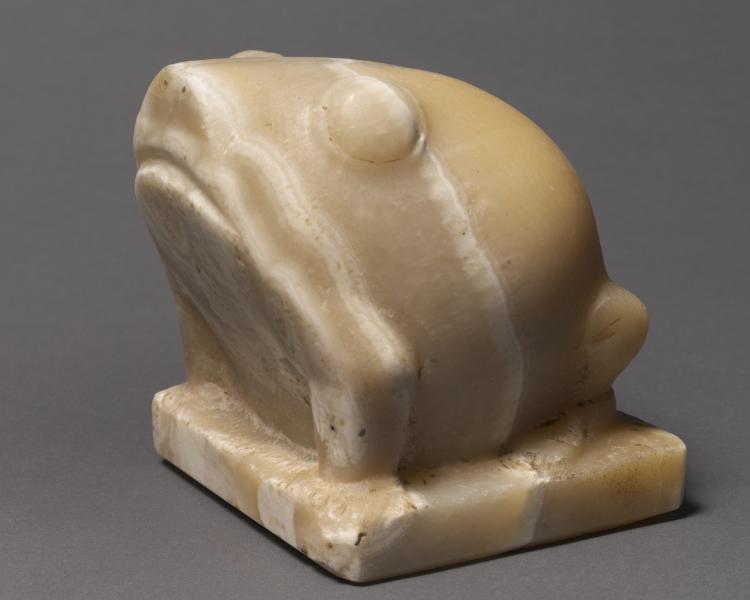
Statue of Heqat, the Frog Goddess
| 제작 시기 | c. 2950 BCE |
|---|---|
| 분류 | Sculpture |
| 재료·기법 | travertine (Egyptian alabaster) |
| 문화권 | Egypt, Predynastic (5000–2950 BCE), Naqada III (3200–3000 BCE)–Egypt, Early Dynastic (2950–2647 BCE), Dynasty 1 |
| 소장 부서 | Egyptian and Ancient Near Eastern Art |
| 이용 조건 | 퍼블릭 도메인 (CC0) — 수업·인쇄에 자유롭게 사용 가능 |
작품 설명
During the Predynastic period statues of animals are much more common than those of humans. This statue of a frog stands at the beginning of a great tradition of animal sculpture in Egyptian art. The sculptor has shown great sensitivity to the natural banding of the stone, using it to enhance the roundness of the animal's form. Small frogs, mostly of faience, are among the most common votive offerings deposited at early temple sites. The frog's exact religious significance in the Predynastic period is unknown, but in later times it was most often identified with Heqat, the goddess who assisted at childbirth.
수업에 이렇게 활용하세요
이 작품은 퍼블릭 도메인이라 수업 자료로 자유롭게 내려받아 인쇄하거나 화면에 띄워 쓸 수 있습니다. 작품의 표현 방식을 관찰하고 따라 그려 보거나, travertine (Egyptian alabaster) 기법에 대해 이야기 나누는 감상 수업에 활용할 수 있습니다.
함께 보면 좋은 작품
- Portrait of Dora Wheeler — William Merritt Chase
- Stag at Sharkey's — George Bellows
- The Biglin Brothers Turning the Stake — Thomas Eakins
- The Race Track (Death on a Pale Horse) — Albert Pinkham Ryder
- Twilight in the Wilderness — Frederic Edwin Church
- Church Street El — Charles Sheeler
이미지 출처: 클리블랜드 미술관(The Cleveland Museum of Art) 오픈액세스. 원본 소장 정보 · LUNA WHALE ART에서 더 많은 명화 검색하기