Virgin and Child with the Young Saint John the Baptist
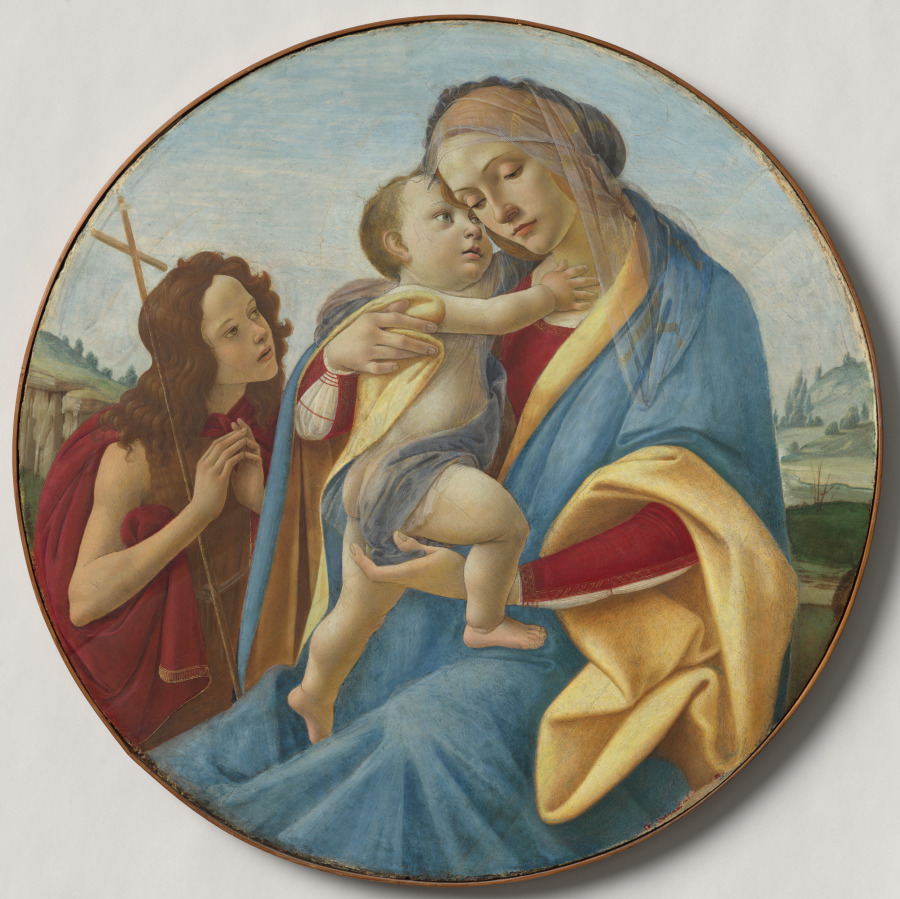
| 작가 | Sandro Botticelli (Italian, 1444/45–1510) |
|---|---|
| 제작 시기 | c. 1490 |
| 분류 | Painting |
| 재료·기법 | tempera and oil on wood |
| 문화권 | Italy, 15th century |
| 소장 부서 | Medieval Art |
| 이용 조건 | 퍼블릭 도메인 (CC0) — 수업·인쇄에 자유롭게 사용 가능 |
작품 설명
The perfectly round form, called a tondo, became popular during the 1440s, especially in Florence. Made for domestic settings instead of churches, the circular format challenged the artist to create a harmonious, balanced composition within this more difficult shape. The attribution has been a matter of debate. Botticelli often collaborated with students, including Filippino Lippi, who would himself become a significant painter. Few specialists have doubted that Botticelli executed the central passages: the delicate modeling of the faces, the graceful poses, the figures’ profound interiority, and the diaphanous veil are the artist’s hallmarks. However, someone else in Botticelli’s studio probably painted Mary’s blue garment, also the most heavily restored part of the painting.
수업에 이렇게 활용하세요
이 작품은 퍼블릭 도메인이라 수업 자료로 자유롭게 내려받아 인쇄하거나 화면에 띄워 쓸 수 있습니다. Sandro Botticelli의 표현 방식을 관찰하고 따라 그려 보거나, tempera and oil on wood 기법에 대해 이야기 나누는 감상 수업에 활용할 수 있습니다.
이미지 출처: 클리블랜드 미술관(The Cleveland Museum of Art) 오픈액세스. 원본 소장 정보 · LUNA WHALE ART에서 더 많은 명화 검색하기