Virupa
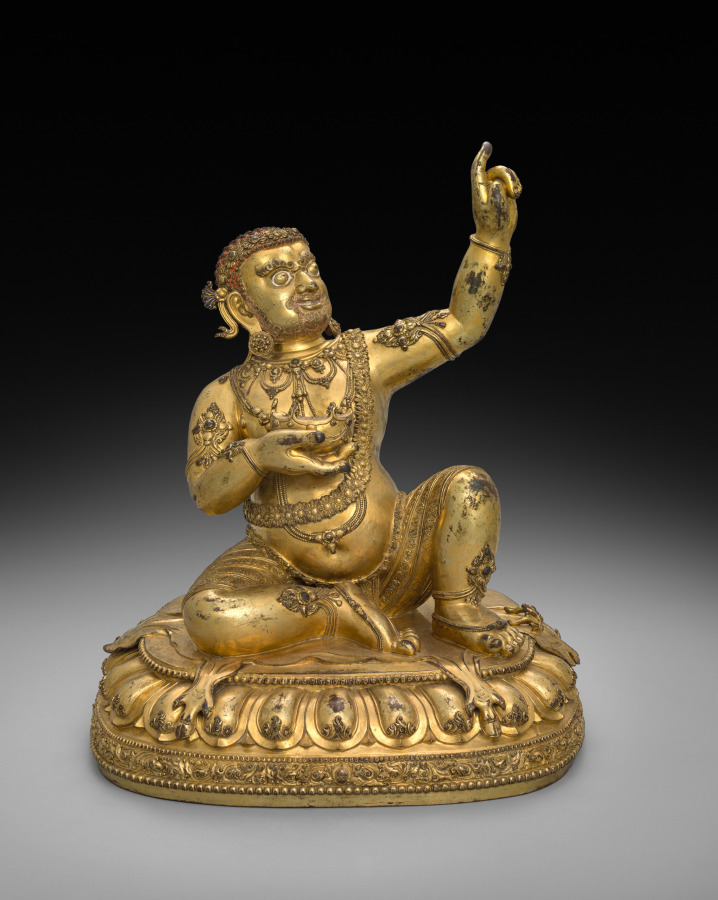
| 제작 시기 | early 1400s |
|---|---|
| 분류 | Sculpture |
| 재료·기법 | Gilt bronze with silver, stones, and pigment |
| 문화권 | China, Ming dynasty (1368-1644), Yongle reign (1403-1424) |
| 소장 부서 | Chinese Art |
| 이용 조건 | 퍼블릭 도메인 (CC0) — 수업·인쇄에 자유롭게 사용 가능 |
작품 설명
Virupa is one of the great teachers in the history of tantric Buddhism. His posture references his ability to stop the sun; as an enlightened being, he can control phenomena of nature. As a tantric practitioner, he overturns ordinary assumptions about proper behavior, so he overeats, drinks large quantities of liquor, and waits for the king to pay his bill at the tavern. <br><br>At the edge of the lotus pedestal is an inscription identifying the image as having been made in the imperial kilns of the third emperor of the Ming dynasty in China as a gift to a Tibetan monastic leader. While closely linked to Tibetan styles, the luxurious detailing, special gilding process, and the casting of the ornaments onto the body without use of inlay are specifically Chinese characteristics.
수업에 이렇게 활용하세요
이 작품은 퍼블릭 도메인이라 수업 자료로 자유롭게 내려받아 인쇄하거나 화면에 띄워 쓸 수 있습니다. 작품의 표현 방식을 관찰하고 따라 그려 보거나, Gilt bronze with silver, stones, and pigment 기법에 대해 이야기 나누는 감상 수업에 활용할 수 있습니다.
함께 보면 좋은 작품
- Portrait of Dora Wheeler — William Merritt Chase
- Stag at Sharkey's — George Bellows
- The Biglin Brothers Turning the Stake — Thomas Eakins
- The Race Track (Death on a Pale Horse) — Albert Pinkham Ryder
- Twilight in the Wilderness — Frederic Edwin Church
- Church Street El — Charles Sheeler
이미지 출처: 클리블랜드 미술관(The Cleveland Museum of Art) 오픈액세스. 원본 소장 정보 · LUNA WHALE ART에서 더 많은 명화 검색하기