Wineglass and a Bowl of Fruit
| 작가 | Willem Kalf (Dutch, 1619–1693) |
|---|---|
| 제작 시기 | 1663 |
| 분류 | Painting |
| 재료·기법 | oil on canvas |
| 문화권 | Netherlands |
| 소장 부서 | European Painting and Sculpture |
| 이용 조건 | 퍼블릭 도메인 (CC0) — 수업·인쇄에 자유롭게 사용 가능 |
작품 설명
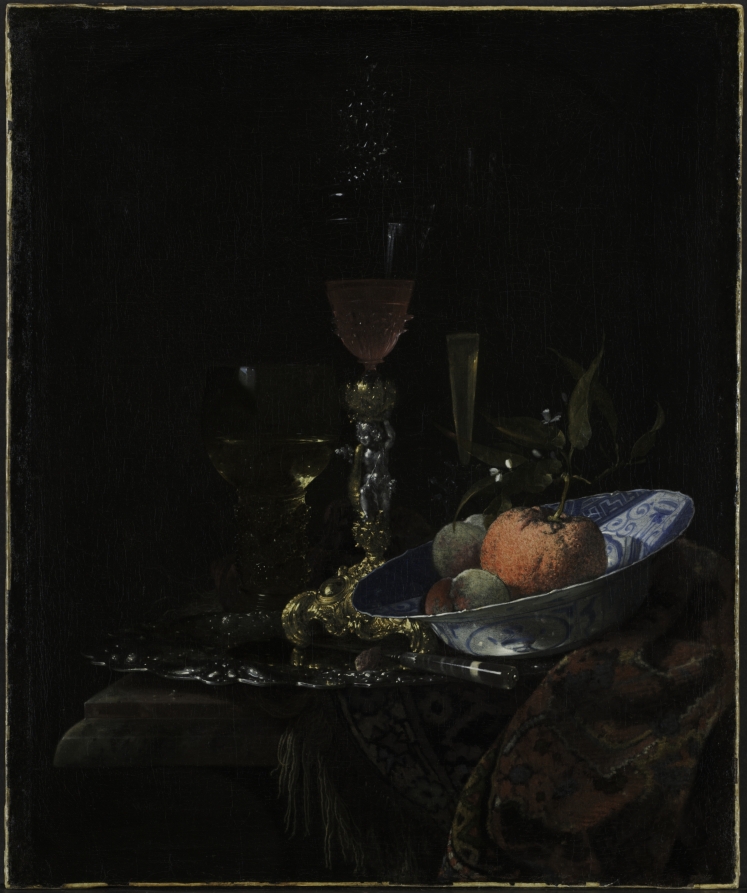
Priceless objects crowd the corner of a stone table in Kalf's composition. Pieces like the silver platter, delicate glasswares, thick rumpled carpet, and a Chinese porcelain bowl with peaches and an orange not only represented the great wealth and global reach of the Dutch trading empire, but were also a way for the artist to demonstrate his skill in recreating various surface textures. Kalf used different kinds of highlights to render reflections—quick dots, lines, and dabs of paint—creating sparkling, twinkling light effects that subtly distinguish objects from the surrounding shadows.<br>In 1797, the German poet Johann van Goethe wrote that Kalf's paintings lead to understanding "in what sense art is superior to nature and what the spirit of man imparts to objects when it views them with creative eyes. . . . if I had to choose between the golden vessels or the picture . . . I would choose the picture."
수업에 이렇게 활용하세요
이 작품은 퍼블릭 도메인이라 수업 자료로 자유롭게 내려받아 인쇄하거나 화면에 띄워 쓸 수 있습니다. Willem Kalf의 표현 방식을 관찰하고 따라 그려 보거나, oil on canvas 기법에 대해 이야기 나누는 감상 수업에 활용할 수 있습니다.
이미지 출처: 클리블랜드 미술관(The Cleveland Museum of Art) 오픈액세스. 원본 소장 정보 · LUNA WHALE ART에서 더 많은 명화 검색하기