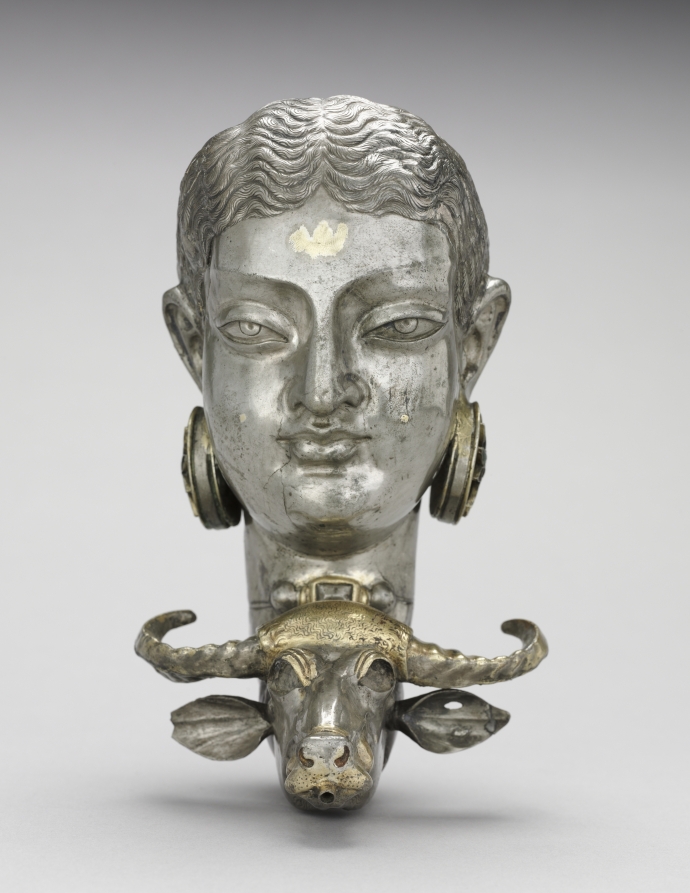
Woman and Water Buffalo Rhyton
| 제작 시기 | 500–700 |
|---|---|
| 분류 | Metalwork |
| 재료·기법 | silver, with mercury gilding and glass inlays |
| 문화권 | Sasanian, Iran, 600s or Turk Shahi dynasty, Kabul, Afghanistan, 500s |
| 소장 부서 | Egyptian and Ancient Near Eastern Art |
| 이용 조건 | 퍼블릭 도메인 (CC0) — 수업·인쇄에 자유롭게 사용 가능 |
작품 설명
Recalling both Greek and Iranian traditions of head vases and <em>rhyta </em>(drinking horns), this unusual silver vessel combines the heads of a woman and a water buffalo. A filling hole on top and a pouring or drinking spout in front make clear its function. An inscription in Middle Persian on its back records its weight: probably 50 <em>staters</em> and three <em>drachmae</em> (close to its current weight of just over 700 grams, or about 1-1/2 pounds). The woman’s flat brow, straight nose, and widely set, heavy-lidded eyes—along with the sectarian mark in gold on her forehead—relate to art of the Indus River Valley and Hindu Kush regions of today’s Pakistan and Afghanistan. While we do not know for sure, numerous scholars have suggested that she may depict the Indian warrior goddess Durga, slayer of the buffalo demon.
수업에 이렇게 활용하세요
이 작품은 퍼블릭 도메인이라 수업 자료로 자유롭게 내려받아 인쇄하거나 화면에 띄워 쓸 수 있습니다. 작품의 표현 방식을 관찰하고 따라 그려 보거나, silver, with mercury gilding and glass inlays 기법에 대해 이야기 나누는 감상 수업에 활용할 수 있습니다.
함께 보면 좋은 작품
- Portrait of Dora Wheeler — William Merritt Chase
- Stag at Sharkey's — George Bellows
- The Biglin Brothers Turning the Stake — Thomas Eakins
- The Race Track (Death on a Pale Horse) — Albert Pinkham Ryder
- Twilight in the Wilderness — Frederic Edwin Church
- Church Street El — Charles Sheeler
이미지 출처: 클리블랜드 미술관(The Cleveland Museum of Art) 오픈액세스. 원본 소장 정보 · LUNA WHALE ART에서 더 많은 명화 검색하기