Yoga Narashimha, Vishnu in his Man-Lion Avatar
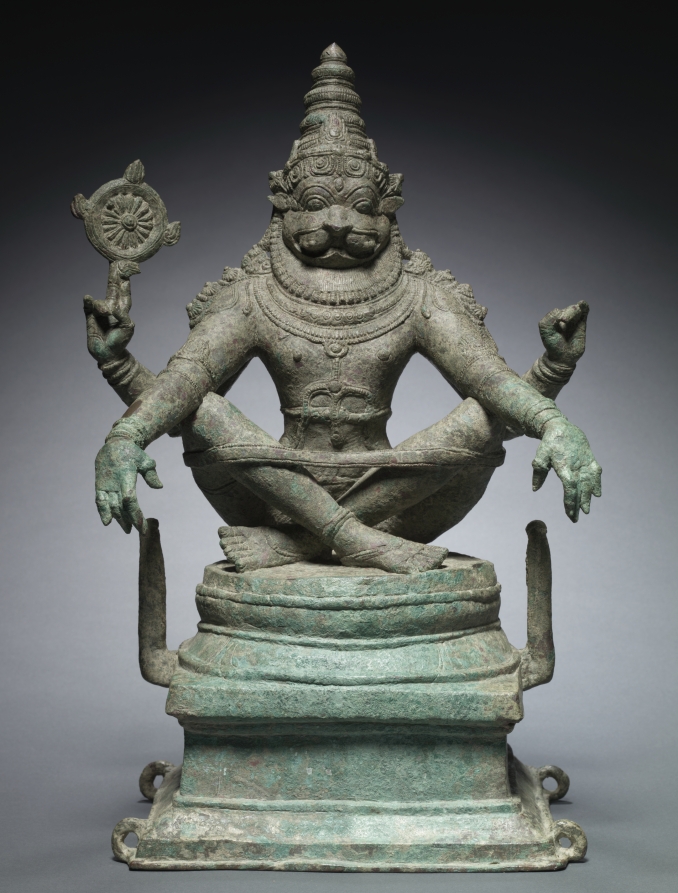
| 제작 시기 | c. 1250 |
|---|---|
| 분류 | Sculpture |
| 재료·기법 | bronze |
| 문화권 | South India, late Chola period (900–1200s) |
| 소장 부서 | Indian and Southeast Asian Art |
| 이용 조건 | 퍼블릭 도메인 (CC0) — 수업·인쇄에 자유롭게 사용 가능 |
작품 설명
Narasimha means “man-lion” in Sanskrit, and is the name of one of the ten main avatars, or incarnations, of the Hindu god Vishnu. For devotees, the man-lion form recalls a myth that describes his superhuman defeat of a seemingly invincible demonic foe. <br><br>This rare iconic form also embodies royal power and yogic discipline. The intensity of his concentration is apparent in the expression of his face over the ruff of mane, the taut posture, symmetry, and perfect proportions of his four-armed body. The yoga band holds the crossed legs up in equilibrium. In his upper right hand he holds the flaming discus that, when thrown, cuts through ignorance and its demonic personifications.
수업에 이렇게 활용하세요
이 작품은 퍼블릭 도메인이라 수업 자료로 자유롭게 내려받아 인쇄하거나 화면에 띄워 쓸 수 있습니다. 작품의 표현 방식을 관찰하고 따라 그려 보거나, bronze 기법에 대해 이야기 나누는 감상 수업에 활용할 수 있습니다.
함께 보면 좋은 작품
- Portrait of Dora Wheeler — William Merritt Chase
- Stag at Sharkey's — George Bellows
- The Biglin Brothers Turning the Stake — Thomas Eakins
- The Race Track (Death on a Pale Horse) — Albert Pinkham Ryder
- Twilight in the Wilderness — Frederic Edwin Church
- Church Street El — Charles Sheeler
이미지 출처: 클리블랜드 미술관(The Cleveland Museum of Art) 오픈액세스. 원본 소장 정보 · LUNA WHALE ART에서 더 많은 명화 검색하기